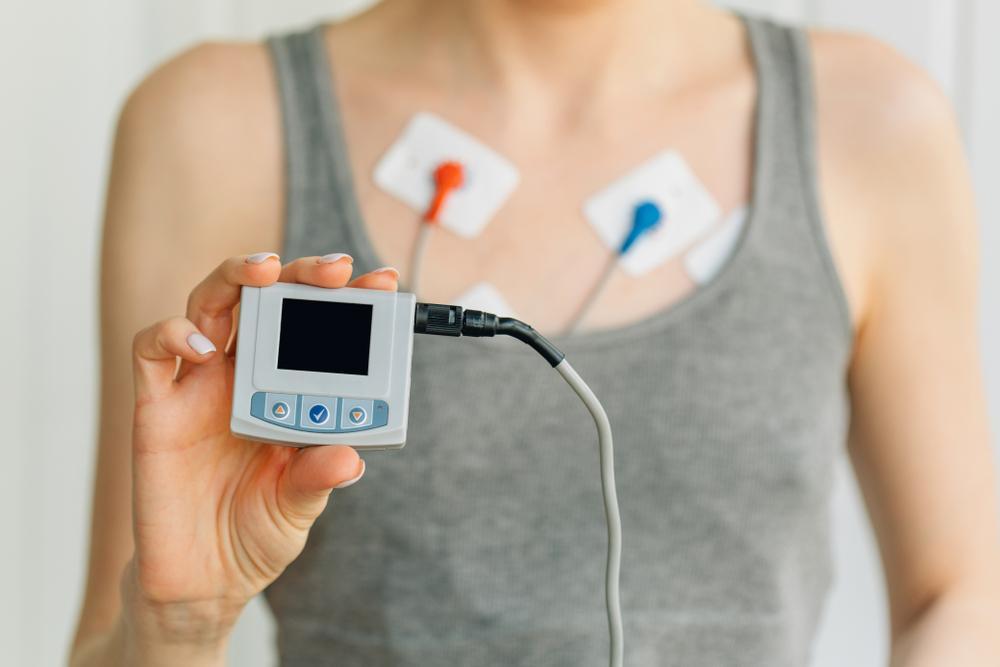
A Holter monitor is a small, portable device that continuously records your heart’s electrical activity (electrocardiogram or ECG) while you go about your normal daily routine. Depending on your physician’s request, the monitor may be worn for 24, 48, or 72 hours, or for up to 14 days.
Unlike a standard ECG, which records only a few seconds of heart activity, a Holter monitor captures your heart rhythm over an extended period. This allows your physician to identify irregular heart rhythms (arrhythmias) that may occur only occasionally and might not be detected during a routine office ECG.
Conditions, Treatments and Services
Navigate through the list below to discover a deeper understanding of the various arrhythmia care conditions, treatments and services that will help patients and their families navigate their heart health journey.
Unless your doctor tells you otherwise, plan to bathe before this appointment. Most monitors can’t be removed and must be kept dry once monitoring begins.
Avoid oily or greasy skin creams and lotions the day of the test, as the cream can interfere with the electrode-skin contact.
Take your usual medications unless otherwise directed by your physician.
You can eat, drink and take medications as you normally would.
A technician will place electrodes that sense your heartbeat on your chest. These electrodes are about the size of a silver dollar. For men, a small amount of hair may be shaved to make sure the electrodes stick.
The technician will then connect the electrode to a recording device with several wires and will instruct you on how to properly wear the recording device so that it can record data transmitted from the electrodes. The recording device is about the size of a deck of cards.
You’ll be instructed to keep a diary of all the activities you do while wearing the monitor. It’s particularly important to record in the diary any symptoms of palpitations, skipped heartbeats, shortness of breath, chest pain or lightheadedness. You’ll usually be given a form to help you record your activities and any symptoms.
Once your monitor is fitted and you’ve received instructions on how to wear it, you can leave your doctor’s office and resume your normal activities.
You will be instructed to remove the monitor at a specified time and to discard the used, as well as unused, electrodes.
The equipment should be removed by hand only.
Place return your monitor by the time specified. It is important to bring the monitor back at the scheduled time; another patient is waiting.
Once the equipment is returned, the data are analyzed, and then reviewed by a cardiologist. Once finalized, a report will be sent to your doctor. Your doctor’s office will notify you of the results.
People can resume their normal daily activities, including driving, after a holter monitor. The data will be reviewed by a cardiologist and the results will be reported to your doctor. If necessary, you may be referred for additional testing or a consultation with a physician.