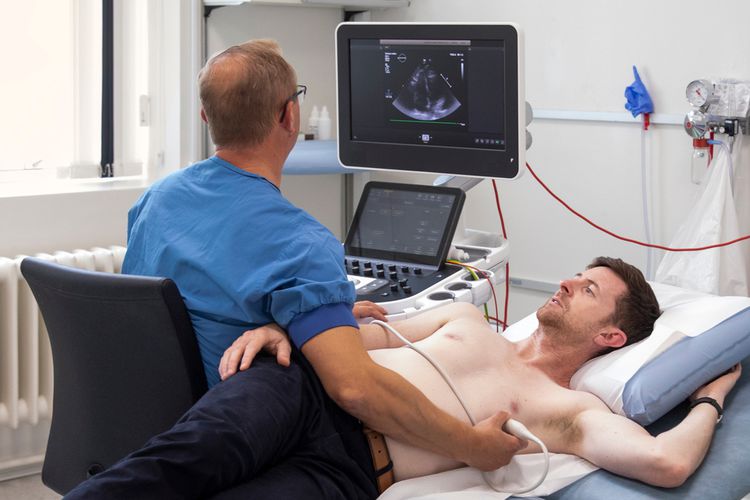
An echocardiogram (ECHO) uses ultrasound to capture images of your heart while it beats. This is the same non-invasive ultrasound technology used to check the health of a baby during pregnancy.
An echocardiogram is used to assess the anatomical function of your heart; valves, chambers, size and shape of the heart, pumping capacity, how the heart relaxes, blood flow in the heart (Eg. leaky valves) location and extent of cardiac disease.
Conditions, Treatments and Services
Navigate through the list below to discover a deeper understanding of the various arrhythmia care conditions, treatments and services that will help patients and their families navigate their heart health journey.
You’ll undress from the waist up and lie down on an examination bed.
The technician (sonographer) will attach stickers (called electrodes) to your chest to record your heart rhythm. Gel will be applied to your chest to capture the images using a device called a transducer. The transducer emits and records the returning sound waves. A computer converts the returning sound wave (echos) into detailed moving images of your heart. These are the images that are viewed by the doctor that reads your echocardiogram.
You may feel some discomfort from the transducer against your chest as the sonographer may need to apply some mild pressure to obtain the best images of your heart.
The sonographer may guide you to breath in and out at certain times and may ask you to roll onto your left side.
It takes about 45 minutes to complete the test.
Your echocardiography will be kept on file for comparison with future echocardiography tests.
For patients with difficult studies, a patient may need a contrast echocardiogram (which requires an IV).
People can resume their normal daily activities, including driving, after an echocardiogram.
Your echocardiogram will be reviewed and the results will be reported to your doctor. If necessary, you may be referred for additional testing or a consultation with a physician.