



Menu
Menu
24-Hour Ambulatory Blood Pressure Monitoring (ABPM)
What is High Blood Pressure (Hypertension)?
Blood pressure is the force of blood pushing against the walls of your arteries as your heart pumps.
Hypertension (high blood pressure) occurs when this pressure remains consistently elevated. Over time, untreated hypertension can damage blood vessels and increase the risk of serious conditions such as:
- heart attack
- stroke
- heart failure
- kidney disease
- vascular disease
Many people with hypertension do not experience symptoms, which is why accurate testing and monitoring are important.

FAQs
Navigate through the list below to discover a deeper understanding of 24-Hour Ambulatory Blood Pressure Monitoring (ABPM) that will help patients and their families navigate their heart health journey.
Atrial fibrillation (AFib or AF) is a type of irregular heart rhythm (arrhythmia). Arrhythmias are due to electrical signal disturbances of the heart. AFib is the most common arrhythmia.
The risk of developing atrial fibrillation increases with age and with other risk factors such as diabetes, high blood pressure and underlying heart disease.
The main complications of atrial fibrillation are stroke and heart failure.
A cardiologist may recommend ABPM to better understand your blood pressure patterns and cardiovascular risk.
This test can help:
-
confirm or rule out high blood pressure
-
detect white coat hypertension (high readings only in medical settings)
-
identify masked hypertension (normal in clinic but elevated at home)
-
evaluate how well blood pressure medications are working
-
assess night-time blood pressure patterns
-
investigate symptoms such as dizziness or fainting
Because blood pressure fluctuates throughout the day, a 24-hour measurement provides far more useful information than a single office reading.
ABPM may be recommended for patients who:
-
have borderline or fluctuating blood pressure readings
-
have suspected white coat hypertension
-
have blood pressure that is difficult to control
-
are starting or adjusting blood pressure medications
-
have symptoms that may be related to low or unstable blood pressure
-
have other cardiovascular risk factors that require closer monitoring
Your cardiologist will determine whether this test is appropriate for you.
Your healthcare provider may order Ambulatory Blood Pressure Monitoring if:
-
they are unable to obtain an accurate blood pressure reading in the office (for example fluctuating readings, episodic hypertension, or suspected white coat hypertension)
-
they suspect drug-resistant hypertension
-
you experience low blood pressure symptoms while taking antihypertensive medication
-
there is concern about autonomic dysfunction affecting blood pressure control
ABPM helps physicians determine whether blood pressure abnormalities are persistent, situational, or related to medication effects.
f your doctor recommends ABPM, an appointment can be scheduled with our clinic.
The test requires two brief visits:
-
Monitor Setup Appointment – the device is attached and instructions are provided.
-
Return Appointment (24 hours later) – the monitor is removed and the data is analyzed.
A referral from your physician or cardiologist may be required depending on the reason for testing.
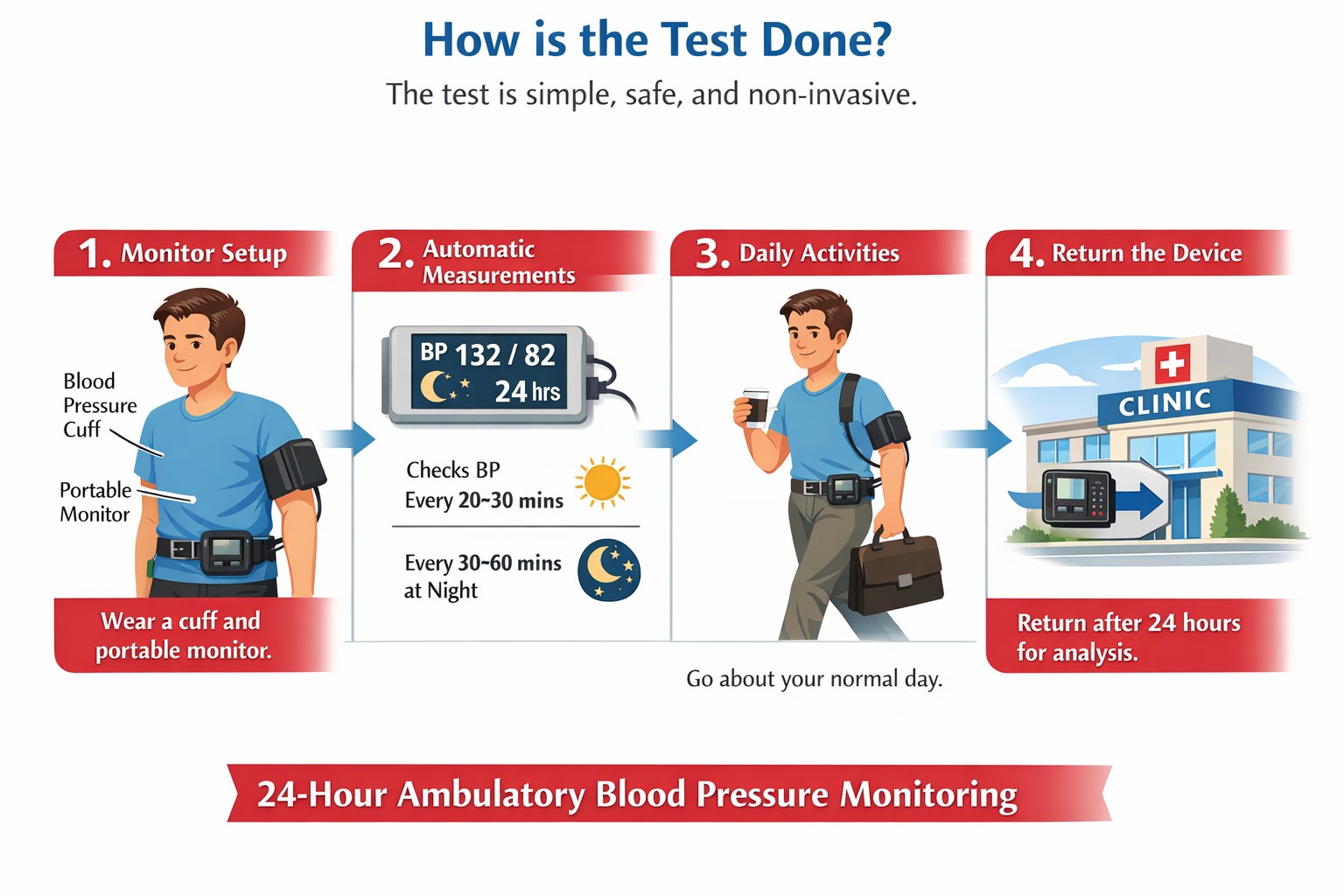
The test is simple, safe, and non-invasive.
1. Monitor Setup
A small portable monitor is attached to a belt or shoulder strap, and a blood pressure cuff is placed around your upper arm.
2. Automatic Measurements
The monitor automatically records your blood pressure:
-
every 20–30 minutes during the day
-
every 30–60 minutes during sleep
3. Continue Your Normal Routine
You can go about most of your normal daily activities. When the cuff inflates, you should keep your arm relaxed and still.
4. Return the Device
After 24 hours, you will return the monitor to the clinic so the data can be downloaded and reviewed by your cardiologist.
After the monitor is returned, the data is analyzed to evaluate your overall blood pressure pattern.
Your cardiologist will review:
-
average daytime blood pressure
-
average nighttime blood pressure
-
blood pressure variability
-
whether your blood pressure drops appropriately during sleep
-
how well your current medications are controlling blood pressure
The results help determine whether:
-
you have hypertension
-
your current treatment is effective
-
medication adjustments or further testing are needed
Your physician will discuss the results and any recommended next steps with you.
The fee for 24-Hour Ambulatory Blood Pressure Monitoring is $90.
This service is not covered by OHIP and is therefore privately paid.
Payment is typically made at the time of your appointment.
Is the test painful?
No. The cuff inflates just like a regular blood pressure test at a doctor’s office. Some patients notice mild pressure during inflation.
Can I shower while wearing the monitor?
No. The monitor must remain dry, so please avoid showering or bathing during the 24-hour test.
Can I sleep normally?
Yes. The cuff will inflate periodically during the night, but most patients are able to sleep normally.
Can I exercise?
Normal daily activities are fine, but vigorous exercise should be avoided while wearing the monitor.
What should I wear?
Wear loose-fitting clothing so the cuff and monitor can fit comfortably under your clothing.